SMP Risk Dashboard: Contraindications and Complication Triage
Scalp micropigmentation is a low-probability procedure with high-severity failure modes, and that asymmetry is what makes screening the decisive step. The deck behind this guide grades five risks on a clinical dashboard. Pathogen exposure, keloid formation, and granuloma response occupy the high-severity band. Allergic reaction and MRI interference sit at low probability. The practical consequence for a Naperville client in Illinois is that the consult room should be spent on two questions: is my own tissue profile a contraindication, and is this practitioner's environment sterile enough to keep the high-severity risks at zero? If you are here looking into hair restoration blog, the sections below walk through the process from the first quote to the finished job.
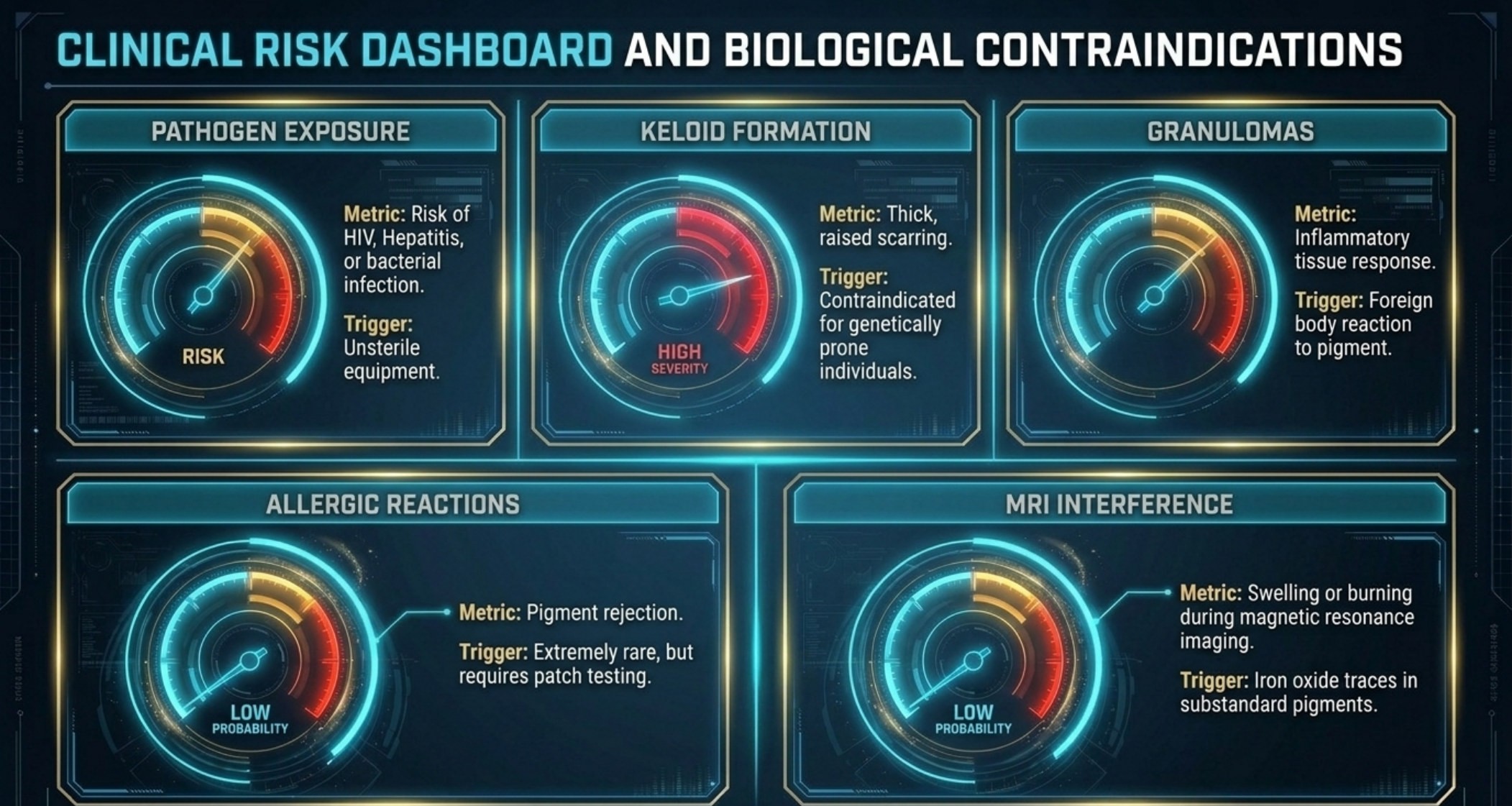
Triage works backwards from the triggers. Every high-severity entry on the dashboard has a single checkable trigger attached to it, which means none of them require speculation to screen out — they require a question and a documented answer. The SMP science and safety overview covers the same ground from the mechanism side.
Pathogen exposure: the trigger is equipment
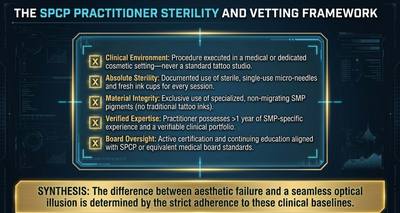
The deck files pathogen exposure — HIV, hepatitis, or bacterial infection — as a high-severity risk whose trigger is unsterile equipment. This is the one entry on the dashboard that is a property of the provider rather than the patient. A blood-borne pathogen cannot be transmitted by equipment that was never contaminated, which is why sterile, single-use micro-needles and fresh ink cups for every session are a control measure rather than a preference.
For a Naperville case, the screening action is documentary: ask for the sterilisation protocol in writing before a date is booked, and ask whether the procedure is performed in a medical or dedicated cosmetic setting rather than a standard tattoo studio. The environment question and the equipment question are the same question asked twice, and a provider who answers both in writing has closed the highest-severity risk on the board.
Keloid formation and granuloma response: the triggers are tissue
Keloid formation — thick, raised scarring — is graded high-severity, and the deck names the trigger directly: individuals genetically prone to keloid scarring. Granulomas, the inflammatory tissue response, are triggered by a foreign-body reaction to pigment. Both are patient-side variables, which places them in the contraindication column rather than the complication column.
The screening split is clean and worth stating in the first consult. A personal or family history of keloid scarring is a contraindication to weigh with a qualified provider before any pigment is placed, not a risk to manage after the fact. Granuloma risk is governed by pigment sourcing: the deck's material standard is a specialized, non-migrating micro-pigment rather than a traditional tattoo ink, and that specification is what holds the foreign-body trigger low.
| Risk | Metric | Trigger | Grade |
|---|---|---|---|
| Pathogen exposure | Risk of HIV, hepatitis, or bacterial infection | Unsterile equipment | High severity |
| Keloid formation | Thick, raised scarring | Genetically prone individuals | High severity |
| Granulomas | Inflammatory tissue response | Foreign-body reaction to pigment | High severity |
| Allergic reaction | Swelling or burning | Extremely rare; requires patch testing | Low probability |
| MRI interference | Pigment rejection during MRI | Iron oxide traces in substandard pigments | Low probability |
Allergic reaction and MRI interference: low probability, specific triggers
Allergic reaction presents as swelling or burning and is graded low probability, but the deck is explicit that it is not zero and that it requires patch testing. MRI interference — pigment rejection during magnetic resonance imaging — is also low probability, and it is traced to iron oxide traces in substandard pigments. The pigment specification removes that trigger at the source, because a specialized, non-migrating micro-pigment carries none of the substandard pigment load the dashboard penalises.
Two of the five dashboard entries therefore reduce to sourcing decisions, and the remaining dermatological question reduces to patch testing. That is the whole triage in one line: verify the pigment, patch test the patient, screen the tissue history.
| Step | Check | Trigger it addresses | Action |
|---|---|---|---|
| 1 | Personal or family keloid history | Keloid formation | Resolve as a contraindication before booking |
| 2 | Provider setting and equipment | Pathogen exposure | Require documented single-use needles and fresh ink cups |
| 3 | Pigment brand and type | Granulomas and MRI interference | Confirm a non-migrating SMP micro-pigment |
| 4 | Patch test | Allergic reaction | Complete before the first treatment session |
Reading severity and probability as separate axes
The dashboard's real lesson is that severity and probability are independent. High severity does not mean likely; it means the consequence, if it occurs, is significant, and keloid scarring sits in the high-severity band even in a person who will never develop it. Low probability does not mean ignore; it means the entry is managed by screening rather than by avoidance.
Read together, the five entries split into two workstreams. The high-severity column is managed by environment and pigment control — provider-side decisions. The low-probability column is managed by patch testing and pigment sourcing — case-side decisions. Neither workstream requires the patient to predict an outcome; both require the patient to ask a specific question and get an answer in writing.
| Axis | What it tells you | How it is managed |
|---|---|---|
| High severity | Consequence is significant if it occurs | Environment and pigment control |
| Low probability | Occurs rarely, but is not zero | Screening and patch testing |
| High severity + low probability | Keloid formation in a non-prone case | Tissue-history screening only |
| Low probability + removable trigger | MRI interference from substandard pigment | Pigment sourcing by name |
What triage looks like before a Naperville booking
The sequence runs in three moves. First, screen the tissue triggers: keloid history and any known pigment allergy, raised directly as contraindication questions. Second, verify the environment: sterile single-use micro-needles, fresh ink cups per session, and a clinical or dedicated cosmetic setting rather than a tattoo studio. Third, require a patch test, because the allergic response is the one dashboard entry that cannot be predicted from history alone.
Run in that order, the two high-severity tissue risks are addressed before any pigment is placed, and the two low-probability risks are handled by screening and specification rather than left to chance. A provider who resists any of those three steps is signalling which column of the dashboard they expect to spend time in. Compare the same risk logic against surgical options in the comparison guides, and score a personal case with the tools hub. This article is educational information, not medical advice, and a qualified provider should assess the individual case.
Frequently Asked Questions
Who should not get SMP?
The deck marks keloid formation as a high-severity risk contraindicated for individuals genetically prone to raised scarring, and grades granuloma response as a foreign-body reaction to pigment. A personal or family history of keloid scarring belongs in the contraindication conversation before any session is booked.
Do I need a patch test before SMP?
Yes. The deck grades allergic reaction — swelling or burning — as low probability but notes it requires patch testing, because it cannot be predicted from history. Patch testing is the case-side control for the one entry that screening cannot settle.
Does SMP interfere with an MRI?
MRI interference is graded low probability and is traced to iron oxide traces in substandard pigments. Because the material standard for SMP is a specialized, non-migrating micro-pigment rather than a traditional tattoo ink, sourcing the pigment correctly is what removes that trigger.
Get matched with hair restoration professionals →
Ready for a Professional Review?
We can connect you with qualified hair restoration professionals who can map your situation to the right treatment.
Get Matched with Hair Restoration Professionals